Date
Sep 10, 2026
Class
Comunicati stampa
International experts, CIMEA and Veneto institutions discuss academic freedom, AI and the recognition of qualifications
On 7 and 8 September, Università Iuav di Venezia hosted and promoted the meeting of the Sub-Working Group on Higher Education (CDEDU) of the Council of Europe, organised in collaboration with CIMEA - Academic Equivalence Mobility Information Center, and the Council of Europe.
The two-day meeting, held at the premises of Università Iuav di Venezia and at Casa San Lorenzo, addressed key issues on the European higher education agenda: the implementation of the 2024–2027 Work Programme for higher education; the Lisbon Recognition Convention Committee; the ENIC and NARIC networks; the European Qualifications Passport for Refugees; the relationship between artificial intelligence and the recognition of qualifications; the automatic recognition of qualifications; the Council of Europe Student Rights Charter; and the legal protection of academic freedom.
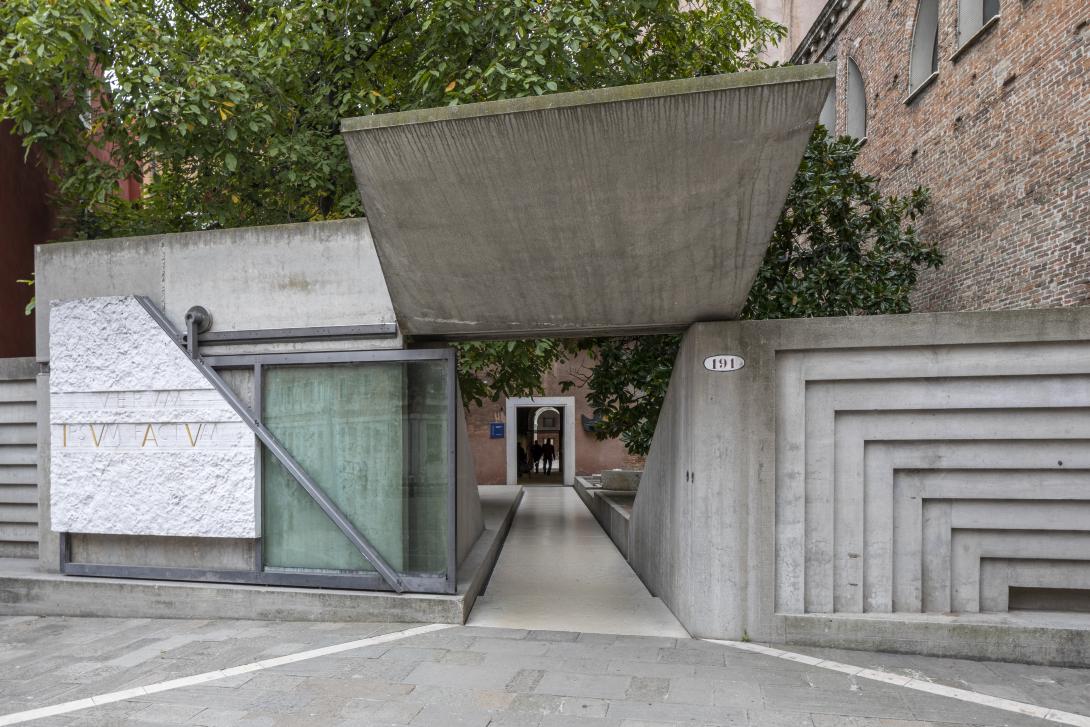
The second day included a visit to the Tolentini and a strategic session devoted to the positioning of Università Iuav di Venezia within the European higher education system.
Participants
The meeting brought together institutional representatives and experts from Belgium, Ireland, Iceland, Finland, Italy, France, Romania, Croatia, Georgia and Estonia, together with Council of Europe officials and delegates from leading European higher education networks: the European University Association (EUA), the European Students’ Union (ESU) and EURASHE, the European Association of Institutions in Higher Education.
Representing the Council of Europe were Villano Qiriazi, Head of the Education Department, and Catherine Dreyer, Head of the Higher and Further Education Unit. CIMEA was represented by Luca Lantero, Director General, and Chiara Finocchietti, President of the ENIC-NARIC networks.
The evening of 7 September: the city welcomes the Council of Europe
On the evening of 7 September, Fondazione San Lorenzo welcomed the international delegation to Casa San Lorenzo for a welcome dinner, while the Procuratoria di San Marco opened the doors of St Mark’s Basilica for an evening visit reserved for the participants.
The initiative was supported by and involved the Metropolitan City of Venice, the Municipality of Venice, the Veneto Region, Fondazione Pace, Venice World Sustainability Capital Foundation and CORILA, confirming the city’s ability to bring its institutions together around an international event.
The context: Venice as a city of knowledge
The initiative places CIMEA, Università Iuav di Venezia and Venice International University at the forefront of efforts to promote the internationalisation of the city, with the aim of highlighting not only tourist Venice, but also Venice as a city of knowledge: an actor in the development of European policies aimed at enhancing the expertise and capabilities present in the Venetian area, as well as those of young researchers and students.
This commitment addresses some of the most significant challenges facing the European university system: an ageing population, rising costs, a shrinking student pool and the need to operate as a truly European and cohesive university ecosystem.
Benno Albrecht, Rector of Università Iuav di Venezia, said: “Venice is not merely the setting for an international meeting: it confirms that a medium-sized city, deeply rooted in its territory, can play an active role in shaping European higher education policies. Hosting the Council of Europe means making available to Europe the concrete experience of a university that works every day on the recognition of qualifications and on the mobility of students and researchers.”
Francesco Musco, President of CORILA and Director of Research at Università Iuav di Venezia, said: “Iuav and CORILA have been working together on research into the Venice Lagoon for many years, and this work has taught us how much scientific research depends on relationships that extend beyond national borders. Hosting the Council of Europe means putting this shared experience of territorial cooperation at the service of an issue that is crucial to the future of our researchers and students: the recognition of qualifications and academic mobility in Europe.”
According to Carlo Federico Dall'Omo, Research Manager and Coordinator of the UNESCO Chair on Heritage & Urban Regeneration at Università Iuav di Venezia: “This meeting stems from practical efforts to bring Strasbourg and the local level closer together. Bringing to Venice a technical body of the Council of Europe responsible for developing policies in the higher education sector means turning a dialogue that too often remains confined to European policy forums into direct relationships. This is an approach that Iuav intends to consolidate, placing its expertise at the service of the local area to strengthen the positioning and value of local capabilities.”
The meeting was organised by Università Iuav di Venezia in collaboration with CIMEA - Academic Equivalence Mobility Information Center, and the Council of Europe, with the support of Fondazione San Lorenzo and the Procuratoria di San Marco.