Date
Oct 27-28, 2026
Time
14:00
Location
Venezia
Class
Seminar / Workshop
The living museum
Mediation, abandonment, locality
27 October, 2–6 pm, Magazzino 6, aula 2.2
28 October, 9 am pm, Palazzo Grassi and Punta della Dogana
The workshop is organized in collaboration with Palazzo Grassi-Pinault Collection and takes place over two days, between the Iuav University venues and Palazzo Grassi and Punta della Dogana.
The workshop is held in English.
On 27 October, an introductory lecture will be given by Iuav PhD candidate Lisa Andreani on the concept of the "living museum." The lecture offers a broad theoretical introduction to the theme of the museum as a living organism, which will be addressed the following day, and includes preparatory readings and a bibliography. It will explore the artistic, curatorial, institutional and cultural mediation practices that have contributed to defining the "living museum." A discussion with the participants is planned, along with the presentation of the guest lecturer for the following day.
On 28 October, the workshop will be led by French curator and researcher Élodie Royer (ENS Paris) and will explore the relationship between artistic practices and locality in ecologically complex environments, investigating how places, histories and communities shape artistic production and accompany its relocation to other exhibition contexts.
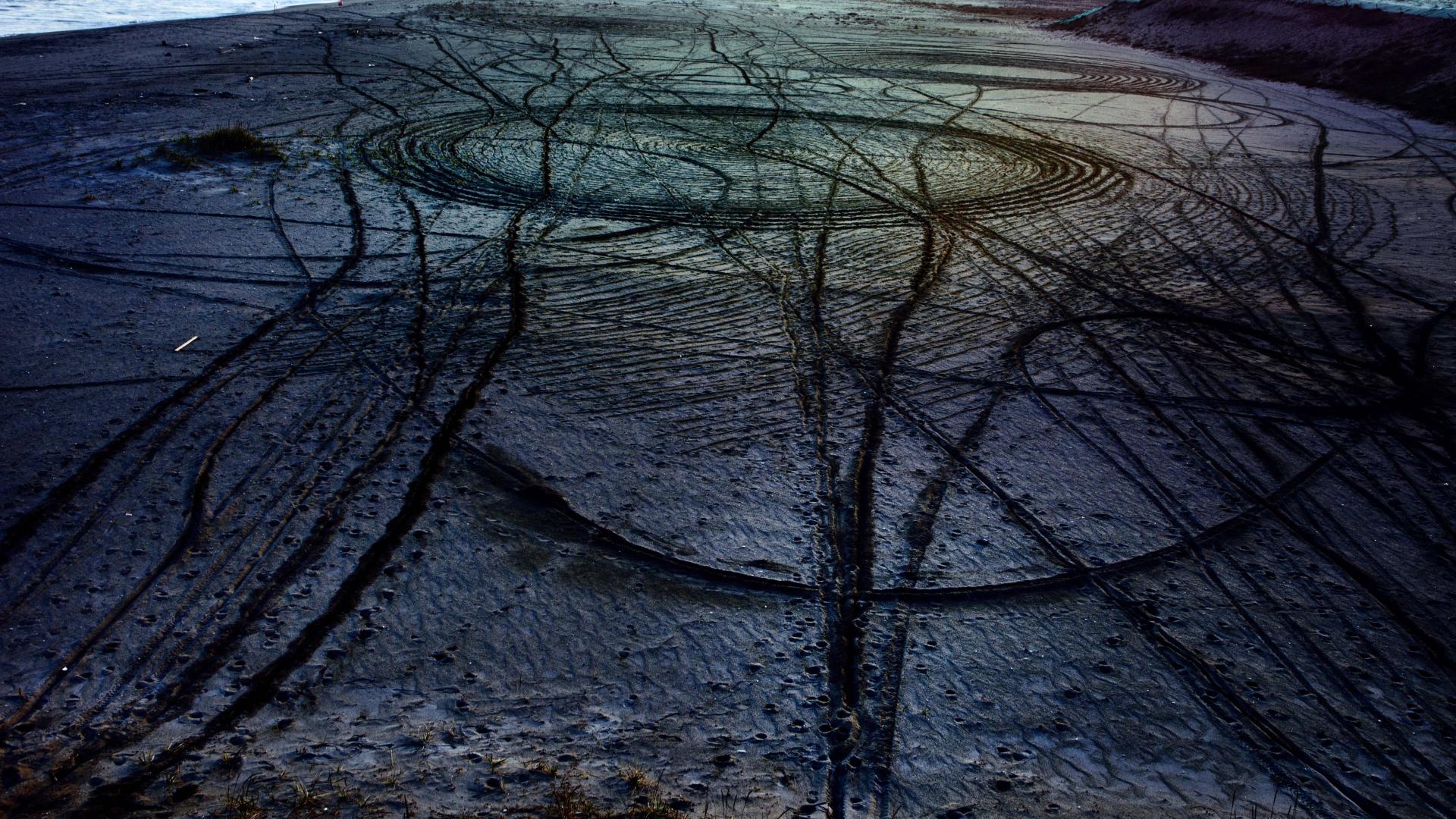
Morning: presentation of three art projects linked to the Fukushima region after the triple disaster of 11 March 2011: The Anatomy Classroom by Hikaru Fujii, the collective Don't Follow the Wind, and Rasen Kaigan by Lieko Shiga. These cases will address the ways of exhibiting issues such as environmental transformation, the processing of memory, abandonment, visibility and displacement.
Afternoon: the workshop takes place at Punta della Dogana, where the exhibition Paulo Nazareth. Algebra is currently on view. Starting from this case study, the workshop aims to develop a reading of locality as a set of relations, experiences and stories that can be questioned, transformed or reimagined through art: how do places and spaces shape artistic practices? And what happens when an artwork moves beyond the place from which it emerged? How can a museum address the notion of displacement?
Each participant will be invited to bring an image, a map or a short text relating to a place that is significant to their own practice or research, in order to reflect their project during the workshop day.
Participants: 15 (limited number due to the constraints of the museum space and the hands-on nature of the activity). The workshop is open to PhD candidates from Iuav and students of the master's programmes in Visual Arts and Expanded Cinema and in Curating Arts and Heritage in Intercultural Perspectives.
How to register: send an email to landreani@iuav.it stating your degree programme and year of enrolment.
Biography of Élodie Royer
Élodie Royer is an independent curator and a PhD candidate at the École Normale Supérieure in Paris, in the SACRe research laboratory. Her current research focuses on the practices of women artists in Japan, in relation to their rootedness in place, the history of disasters and environmental struggles in the country, and ecofeminism. Since her residency at Villa Kujoyama in Kyoto in 2011, she has worked regularly with the Japanese art scene. In 2026, she curated The Ecology of Relationships at FRAC Sud in Marseille, The Ecology of Things in 2025 and Les Êtres Lieux in 2022, both at the Maison de la culture du Japon in Paris. Between 2016 and 2020 she also curated, together with Che Kyongfa, a series of exhibitions commissioned by KADIST and the MOT Tokyo Museum of Contemporary Art: Things Entangling (MOT), Les nucléaires et les choses (KADIST) and Almost nothing, yet not nothing (Tokyo University of the Arts). She is a consultant for the KADIST collection and a member of the Scientific Advisory Board of the LAM — Lille Museum of Modern and Contemporary Art (France).